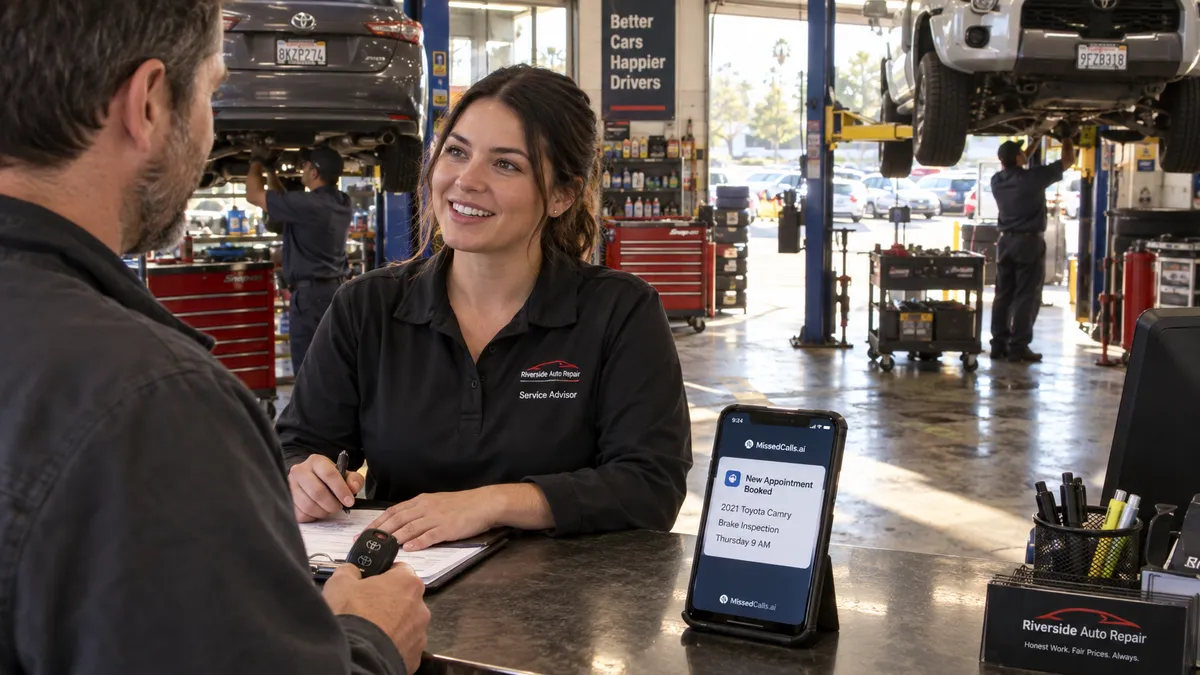
The short answer: independent auto repair shops miss 20–34% of inbound calls during peak business hours — not after hours, but right in the middle of the day when demand is highest. The average missed call is worth $250 in immediate revenue and up to $4,200 in lifetime customer value. Most of those callers never call back.
It's 9:15 on a Tuesday morning. Your service advisor is at the counter walking a customer through a brake job estimate. A second customer just pulled up with a check engine light. The phone rings. Nobody picks up. The caller waits four rings, gets voicemail, and hangs up — then opens Google Maps and calls the next shop on the list.
That scenario plays out dozens of times a week in independent auto repair shops across the country. It's not a staffing problem, and it's not carelessness. It's a structural mismatch: the moments when your bays are fullest and your advisors are most engaged are the exact same moments when inbound call volume is highest.
The fix isn't hiring another person. It's giving your shop a phone system built for the way auto repair actually works.
The Peak Hours Problem Nobody Talks About
Most auto repair owners assume they miss calls after hours or on weekends. Some do. But the bigger leak is happening during regular business hours.
Industry call analytics from Marchex put the missed-call rate at 20–30% for the average independent service department — and that number climbs even higher during the busiest windows of the day. The 8 AM to 11:30 AM window is particularly vulnerable: service advisors are processing drop-offs, writing estimates, and managing the morning rush while the phone rings in the background.
A ringing phone competes with a customer standing at the counter. The counter always wins. And that's fine — the person in front of you deserves full attention. The problem is what happens to the caller who didn't get through.
According to AutoLeap and multiple industry sources, 80% of callers who reach voicemail don't leave a message. And 85% never call back. The caller who hung up at 9:17 AM isn't waiting for you to return their call at 2 PM. They've already booked with someone else.
What Every Missed Call Actually Costs You
Here's a number worth sitting with: industry analysis puts the average missed call cost at $250 per call for an independent auto repair shop. That's the blended figure once you account for the average repair order and the share of callers who were ready to book.
The PartsTech 2025 survey of 752 U.S. shops found the most common repair order band is $500–$749. Miss just three calls a week — a conservative figure for a busy shop — and you're looking at over $90,000 in uncaptured annual revenue.
But the immediate job loss isn't even the full picture. AAA consumer research puts the lifetime value of a loyal auto repair customer at approximately $4,200 — the oil changes, inspections, brake jobs, and referrals that add up over the years. Every caller who hangs up and finds a different shop isn't just a one-time repair order you lost. It's a relationship that never started.
Why Hiring More Staff Doesn't Solve This
The obvious answer is to add a dedicated front desk person to handle phones. Shops try this. It helps — until the new hire is processing a payment or explaining a repair estimate to someone who's confused about what a timing belt actually does. The phone rings. Nobody picks up.
You can't staff your way out of a structural call-volume problem. Auto repair call spikes are unpredictable and clustered: a cold morning generates six quote requests before 9 AM. A hail event sends tow requests in rapid succession. Lunch coverage gaps happen every day. You'd need to hire specifically for peaks, which means overstaffing during every quiet hour in between.
There's also the after-hours reality. Nearly one-third of all attempts to contact auto repair shops happen when the shop is closed, according to AAA roadside assistance data. That's the person who noticed a grinding brake noise on their evening commute and wants to get on your schedule before the week gets away from them. If your phone rolls to voicemail at 6:30 PM, they're booking at the shop that has a real answer.
How AI Phone Answering Works for an Auto Repair Shop
MissedCalls.ai answers every call in under 2 seconds — whether your advisors are in the middle of a write-up, on another call, or closed for the night. The conversation is natural. No press-1 menus. No hold music. Just a straightforward exchange that captures what the customer needs and gets them scheduled.
Here's what that looks like in practice:
A caller says their car is pulling to the right and they're hearing a grinding sound when they brake. The AI asks the right intake questions — year, make, model, when the issue started, how urgent they feel it is. It confirms appointment availability and books them into your schedule. Before the call ends, the caller has a confirmed time, and your team has the vehicle details and symptom summary waiting in your system when they walk in the door.
For urgent callers — the overheating engine, the grinding brakes, the sudden breakdown — the AI can escalate immediately to a live transfer to your team, or capture the details and trigger an instant alert so you can call back within minutes while they're still in decision-making mode.
After hours, the system keeps working. The person who calls at 8 PM about a check engine light gets a real conversation, not a voicemail, and wakes up the next morning with an appointment already on their calendar.
Is This Right for Your Shop?
If your service advisors are solid at their jobs but genuinely can't answer every call while they're writing up vehicles — this is built for you. If you're already running Google Ads or local SEO to drive phone calls, every unanswered ring is marketing budget that didn't convert. If you've ever had a slow Tuesday and wondered where the work went — some of it called on Monday and couldn't get through.
The math isn't complicated. Pull your missed-call count from your phone provider for the last 30 days. Multiply by your close rate and your average repair order. That's the minimum floor of what's walking out the door.
Shops that answer every call — even the ones at 8:47 AM when both advisors are tied up — win more first-time customers, keep more of their existing ones, and build a reputation for actually picking up. In a market where most of your competition is still letting calls roll to voicemail, being the shop that always answers is a genuine competitive edge.
If you're already using outbound service reminders to bring past customers back, adding inbound AI answering closes the other half of the loop — making sure every new caller who reaches out actually gets captured. (Read how AI outbound reminder calls fill slow days for auto repair shops.)
Ready to Stop Losing Calls During Your Busiest Hours?
See exactly how MissedCalls.ai handles an auto repair call — from the first ring to a confirmed appointment — in a live demo tailored to your shop.
Book your personalized demo at MissedCalls.ai →
Frequently Asked Questions
How many calls do auto repair shops typically miss?
Industry data from Marchex and multiple automotive call analytics providers puts the missed-call rate at 20–34% for independent auto repair shops during regular business hours. The miss rate climbs even higher during peak windows like the morning drop-off rush (8–11:30 AM) and after business hours, when nearly one-third of all customer call attempts occur.
What does a missed call cost an auto repair shop?
Industry analysis puts the average missed call value at approximately $250 per call, based on typical repair order values and booking conversion rates. Missing just three calls per week adds up to over $90,000 in uncaptured annual revenue — and that doesn't include the lifetime value of customers who chose a competitor instead.
Do callers leave voicemails or call back if nobody answers?
Rarely. According to AutoLeap and multiple industry sources, 80% of callers who reach voicemail don't leave a message, and 85% never attempt a second call. Auto repair callers have an urgent, specific need — a noise, a warning light, a deadline — and they'll call the next shop on their Google Maps list before your team has a chance to call back.
Can AI phone answering handle automotive terminology and triage urgency?
Yes. MissedCalls.ai is configured with your shop's specific services, hours, and intake questions. It can capture vehicle year, make, model, and symptom details, distinguish between a routine oil change request and a brake emergency, and escalate urgent callers to a live transfer or instant alert to your team — all in a natural, conversational call that takes under two minutes.
What happens to calls that come in after the shop closes?
MissedCalls.ai answers 24/7. After-hours callers get a real conversation, have their repair request captured, and can be booked into your next available appointment slot. Your team arrives in the morning with those jobs already scheduled instead of a voicemail inbox to sort through.
